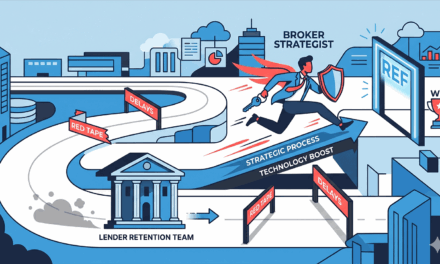


Too Busy to Read? We’ve Got You.
Get this blog post’s insights delivered in a quick audio format — all in under 10 minutes.
This audio version covers: No-Clawback Is a Best-Interest Question Now

The No-Clawback Wave
Lender shift · Two-year regulatory cap · 2026
Lenders rewriting clawback
The clawback clock (now capped at 24 months)
0–12 mo
~100% clawed back
12–18 mo
~50%
18–24 mo
~25%
24 mo +
Nil — capped
Keep the two decisions in separate boxes
✓ Clawback belongs here
- Panel & accreditation strategy
- Cashflow & trail-book planning
- How much you invest in retention
✗ Never here
- Why this client got this lender
- Any suitability or file note
- Weighing your commission vs their options
The rule of thumb: clawback affects you, not the borrower — so let retention protect your income, and recommend every file purely on the client’s merits.
No-Clawback Is a Best-Interest Question Now
ORDE, La Trobe, MA Money and Mortgage Ezy are tearing up clawback. That is good news for your cashflow — and a quiet new way to trip your Best Interests Duty if you let it steer the file.
For years, clawback was a back-office irritation — a line item that stung when a client refinanced inside two years and the lender pulled back your upfront. In 2026 it has quietly become something more strategic, and more dangerous: a factor that can pull your lender recommendation away from your client’s best interests if you are not deliberate about keeping it out.
The trigger is a genuine shift in the market. A growing list of lenders has moved to scrap or shrink clawback. ORDE Financial runs a zero-clawback policy across its entire range. La Trobe Financial has done the same. MA Money has leaned into the no-clawback trend as it expands into commercial, SMSF and residential bridging. Mortgage Ezy removed clawbacks from a swathe of its product set. And the regulatory backdrop now caps any clawback arrangement at two years from the start of the credit contract — for refinances, measured from the day after the refinanced credit becomes available.
The quick version
- The no-clawback wave is real and growing — and commercially material in a high-refinance market.
- Clawback is your remuneration risk. It does not change your client’s loan cost.
- That means it must not drive an individual lender recommendation under BID.
- The clean approach: separate the file decision from the business decision.
- Reduce clawback exposure through retention and service, never through lender steering.
What is actually changing
Two things are moving at once. On the lender side, the competitive pendulum is swinging against clawback. Non-bank and specialist lenders have worked out that brokers route more business to lenders who do not punish them when a client’s circumstances change for reasons entirely outside the broker’s control. Zero-clawback has become a channel-acquisition strategy, and once a few credible lenders adopt it, the rest face pressure to follow.
On the regulatory side, clawback can no longer stretch indefinitely. Arrangements are prohibited beyond two years from the start of the credit contract. For a refinance, the clock starts the day after the refinanced credit is available. The practical effect is a tighter, more predictable clawback window across the board, even at lenders that retain it.
For a broker, that is real money. In a market where refinancing has surged and a meaningful share of clients move within 24 months, the difference between a full-clawback and a zero-clawback panel can shape your cashflow for the year. It is entirely reasonable to welcome the shift — the danger is only in how you let it influence your advice.
Here is the trap
When a no-clawback lender protects your income and a full-clawback lender exposes it, the temptation is obvious: nudge the file toward the lender that is safer for you. That is exactly the move the Best Interests Duty exists to prevent.
BID requires you to act in the client’s best interests and, under the conflict-priority rule, to prioritise the client’s interests over your own where they diverge. A recommendation that leans on a lender because it shields your remuneration is the textbook example of that divergence. It is also the kind of pattern ASIC’s ongoing review of broker conduct is built to detect — not in a single file, but in the shape of a broker’s whole book tilting toward self-protective lenders without a client-merits explanation.
But you cannot just ignore it either
Pretending clawback does not exist is not the answer — it is a real commercial risk you are entitled to manage. The discipline is about where you let it operate. Clawback belongs in your business-model decisions, not in your individual file recommendations.
Where clawback legitimately belongs
- Panel and accreditation strategy: which lenders you take the time to accredit with and build fluency in.
- Cashflow planning: modelling your at-risk trail and provisioning for it.
- Retention investment: how much you spend keeping clients beyond the clawback window.
Where it must never appear
- The reasoning for why this client was placed with this lender.
- Any file note, conversation or recommendation that weighs your commission risk against the client’s options.
A clawback-aware model that stays BID-clean
- Split the two decisions explicitly. Lender recommendation is decided on client merits only. Lender strategy — who is on your panel, where you build depth — is a separate business question where clawback is fair game.
- Engineer retention so churn falls naturally. Structured annual reviews, proactive rate checks and genuine ongoing value keep clients past the two-year window — cutting clawback exposure without touching a single recommendation.
- Map every lender’s clawback schedule. Know the tiers, know the new two-year ceiling, and model your trail book’s exposure so the risk is quantified, not feared.
- Keep remuneration out of suitability notes. Your file reasoning should stand up if a client, an auditor or ASIC reads it — and never mention your own clawback risk.
- Treat clawback reform as a retention prompt. Use the shifting landscape to sharpen your client-care program, not to re-route files toward self-protective lenders.
The reframe: a no-clawback panel is a gift to your business resilience, not a shortcut for your advice. Recommend on the merits every time; let retention — not steering — be what protects your income.
Typical clawback structure (and why retention beats it)
| Discharge timing | Typical clawback | Your defensive lever |
|---|---|---|
| Within 12 months | ~100% of upfront | Onboarding & early-value touchpoints |
| 12–18 months | ~50% | First annual review, rate health-check |
| 18–24 months | ~25% | Proactive retention offer, repricing |
| Beyond 24 months | Nil (now capped) | Relationship & repeat/referral business |
Schedules vary by lender — confirm each one — but the shape is consistent, and so is the lesson: the most reliable, fully compliant defence against clawback is a client who does not want to leave.
How a book-level tilt gets noticed
Brokers sometimes assume best-interests scrutiny happens file by file. In practice, the more revealing view is the shape of a whole book. If a broker’s recommendations cluster heavily around the handful of lenders that happen to protect their commission — without a client-merits reason that explains the pattern — that concentration is visible to an aggregator’s compliance team long before any single file looks wrong.
This is where the conflict-priority rule does its work. The Best Interests Duty does not merely ask you to consider the client’s interests; where your interests and theirs diverge, it requires you to put the client’s first. A tilt toward self-protective lenders is the textbook signature of that rule being inverted — your remuneration risk, rather than the client’s circumstances, quietly shaping the spread of your advice.
Picture two near-identical clients in the same week: same goals, same profile, both well served by a full-clawback lender on the merits. If both are nonetheless routed to a no-clawback alternative, the file notes need to explain why on the client’s terms — better product fit, structure, cost or feature — and not on yours. If the only honest explanation is “it protected my upfront,” that is not a best-interests recommendation, however small the difference to the client.
This is also why the quarterly self-review matters more than any single sign-off. A broker who looks only at individual files can convince themselves each one was defensible while missing the pattern that tells the real story. Stepping back to read your own settlement mix is the cheapest compliance habit available — and the one most likely to catch a drift before anyone else does.
Frequently asked
Can I recommend a no-clawback lender?
Does clawback affect my client at all?
What is the two-year rule?
How do I cut clawback exposure without breaching BID?
The bottom line
The disappearance of clawback at a growing number of lenders is one of the better pieces of news brokers have had in a while. Banked correctly, it strengthens your cashflow and your resilience. Banked carelessly — as a reason to favour certain lenders — it becomes a BID liability hiding in plain sight. Keep the business decision and the file decision in separate boxes, let retention do the heavy lifting, and you get the upside without the risk.
Lender shifts, decoded for brokers
The Broker Times follows the policy and remuneration changes that move your business — and flags the compliance angles before they bite.
Loan TipsClawbackBIDNon-banks
More at The Broker Times →Clawback Exposure Estimator
A cashflow-planning tool — model the trail at risk, then defend it with retention.
Use this for planning, not steering. Clawback is your remuneration risk, not your client’s cost, so it must never influence which lender you recommend. The compliant defence is retention that keeps clients past the window — never routing files toward lenders that protect your commission. Estimates only; confirm each lender’s actual schedule.
Disclaimer: This article is for general information and professional development purposes only. It does not constitute legal, compliance, or financial advice. Brokers should consult their aggregator’s compliance team and, where required, seek independent legal advice regarding their obligations under the National Consumer Credit Protection Act 2009 and ASIC’s responsible lending guidelines.