

Listen to the Brief
Audio overview coming soon — check back shortly.
The Discharge Authority Race
The 4.35% Refinance Window in 6 Numbers
What brokers need to know about retention dynamics in May 2026.
Tell the client the retention call is coming. Ask them to forward any offer to you before responding.
Don’t lodge discharge with the application — wait until the new lender confirms approval.
CRM-trigger a check-in call three days after lodgement.
Side-by-side: rate, fees, features, structure. Save it to the file — it’s your BID evidence.
Most BDMs hold 5–15 bps of pricing flexibility. Use it strategically.
Stay or pivot — record the rationale. It protects you under BID and at aggregator review.
Discharge workflow is now a commercial discipline.
Brokerages that systematise it protect both pipeline and BID position.
The Discharge Authority Race: How Brokers Win Refinances When Retention Teams Move First
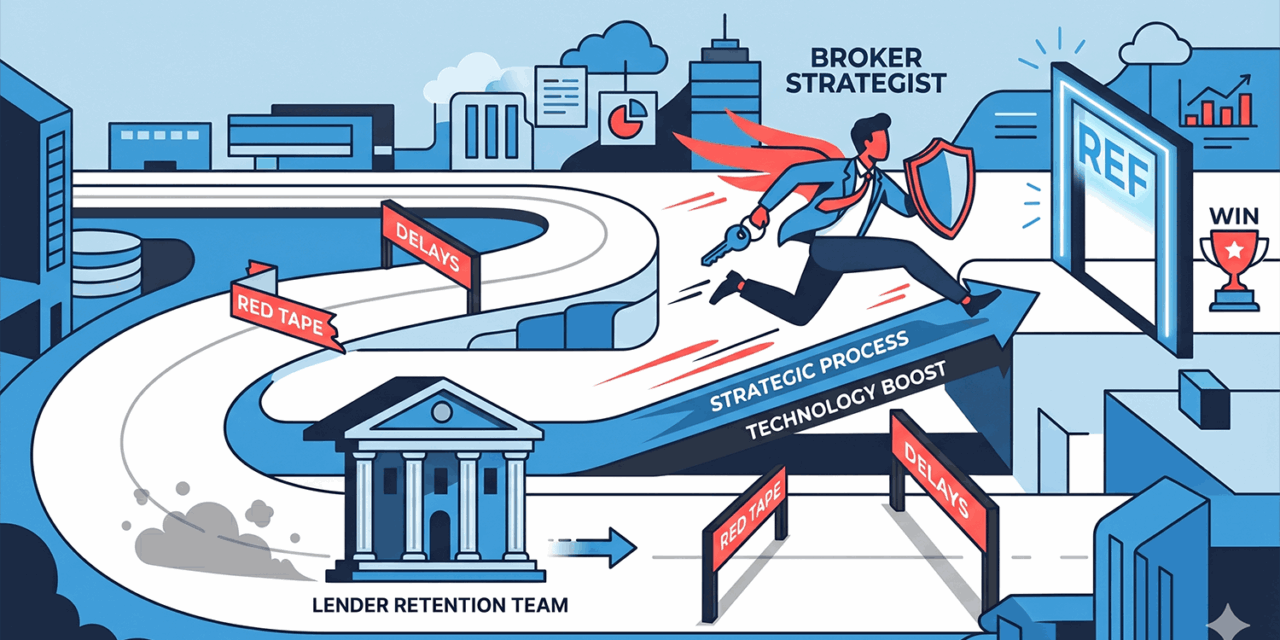
With 4.35% landing across the major book between 15 May and 22 May 2026, retention teams are calling clients before the broker even gets unconditional approval. Here’s how to win the race.
In This Article
Why Discharge Authorities Decide Refinance Outcomes
Until 2024, most discharge authorities were treated as administrative paperwork. That model is now broken. Major bank retention teams reach borrowers within 24 to 72 hours of a discharge authority hitting the system, with structured pricing, hardship variations, and switch-to-fixed propositions ready to deploy.
The result is a widening window of vulnerability — the period between client sign-up and refinance settlement where a retention team can re-engage the client and unwind six weeks of work.
What Has Changed Since the May Hike
Three structural shifts have sharpened the discharge battle this quarter. Retention pricing flexibility has expanded — discounts of 35 to 65 basis points below carded rates are now common. Hardship channels are being used as soft retention tools. And major-bank discharge processing windows have stretched to 21 to 28 business days, giving retention more time to engage.
What this means for your file
If a retention offer is accepted as a hardship variation while a refinance is in flight, the BID analysis becomes a moving target. Document everything.
The BID Lens on Retention
Under the Best Interest Duty, every refinance file in 2026 needs a documented post-recommendation review workflow. If a retention offer lands, the broker should be able to compare it objectively against the recommended product — and either confirm or pivot. Files that show no engagement with the retention offer are not BID-defensible.
A Practical Six-Step Playbook
The playbook in summary: pre-brief before signing; hold discharge until unconditional approval; set a 72-hour retention watch; run a documented offer comparison; escalate to lender BDM when warranted; and document the outcome whichever way it lands.
Pipeline Implications for H2 2026
The retention infrastructure built between 2024 and early 2026 is now permanent. Even when the cycle softens, retention teams will continue to call. Brokerages that adapt discharge workflow will protect 15 to 25% of refinance pipeline currently being lost to retention friction.
Key Takeaway
The discharge authority used to be paperwork. In 2026, it is the moment your refinance file is most exposed. Treat it as a structured workflow — not a form — and you’ll protect pipeline and BID position together.
More broker-first insights at The Broker Times.
Self-Assessment
Is Your Discharge Workflow 4.35%-Ready?
Tick the items already in place in your brokerage. The score at the bottom tells you where you sit.
Pre-brief script before signing
Every refinance client hears the retention call is coming and is asked to forward offers.
Discharge held until unconditional approval
Discharge authority is not lodged with the application — only after new lender confirms.
72-hour CRM follow-up task
Automated reminder to check the client three days after discharge lodgement.
Standardised retention comparison template
A side-by-side document covering rate, fees, features and structure — saved to the file.
Active BDM escalation channel
You know who to call at each lender to access pricing flexibility within 24 hours.
Documented outcome rationale
Stay or pivot — the reasoning is recorded for BID and aggregator review.
0 of 6 in place
Tick items above to see your readiness level.
Disclaimer: This article is for general information and professional development purposes only. It does not constitute legal, compliance, or financial advice. Brokers should consult their aggregator’s compliance team and, where required, seek independent legal advice regarding their obligations under the National Consumer Credit Protection Act 2009 and ASIC’s responsible lending guidelines.