
Too Busy to Read? We’ve Got You.
Get this blog post’s insights delivered in a quick audio format — all in under 10 minutes.
This audio version covers: Who Owns the File Note When the AI Answers?

AI in the Broker Workflow
Speed up the research · Keep the responsibility
What the new tools do
Jiffi AI
Policy answers across 45 lenders in seconds.
Doc Renamer
Auto-names client documents to your convention.
Alt-doc matcher
Maps complex files by ABN, BAS & credit profile.
Org analytics
Pipeline & conversion visibility for brokerages.
Three risks brokers underrate
Wrong policy
Confident ≠ correct.
Stale policy
Lender rules move weekly.
Automation bias
Accepting the answer unchecked.
Input, not authority — in 5 moves
Shortlist, don’t decide.
Verify material policy at source.
Write your own file reasoning.
Record tool & date used.
Govern AI use in your compliance docs.
Bottom line: automation changes who does the work, not who is accountable. The tool researches; you own the recommendation.
Who Owns the File Note When the AI Answers?
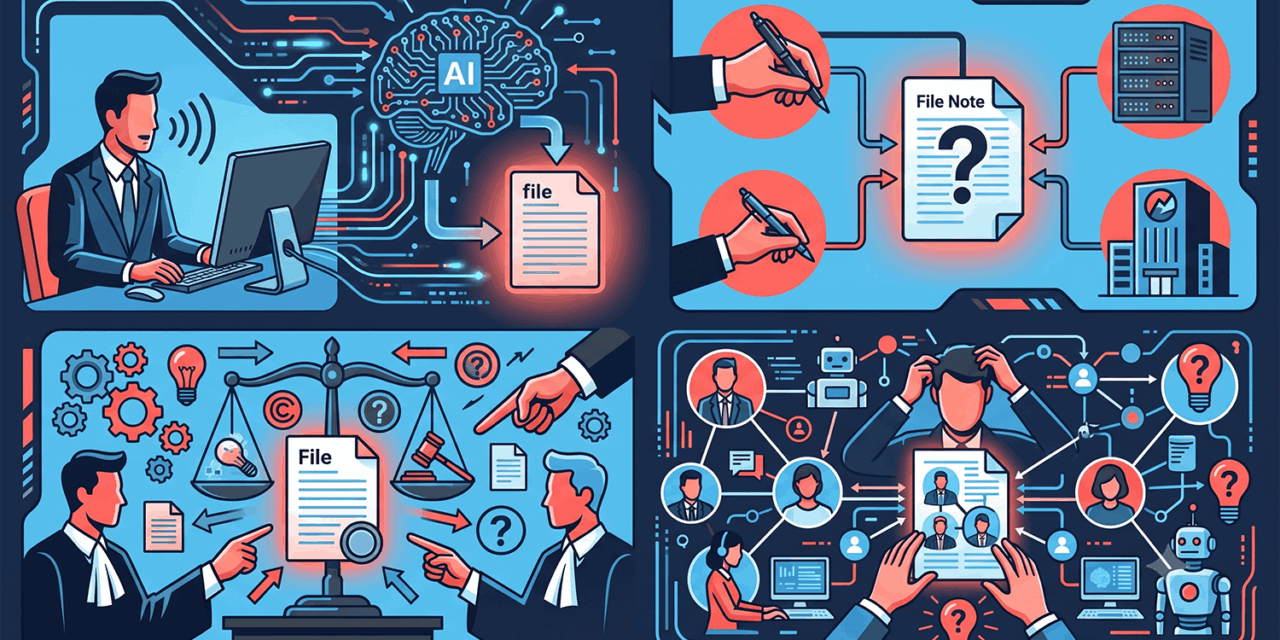
Jiffi-style AI credit analysts can settle a 45-lender policy question in seconds. But when ASIC asks why you chose that lender, “the tool said so” is not a defence. Here is how to use AI without outsourcing your Best Interests Duty.
Quickli’s Pro tier — now in front of a platform used by more than 13,000 Australian brokers — folds artificial intelligence directly into the serviceability workflow. Its Jiffi AI acts as an AI credit analyst, answering policy and product questions across 45 lenders. It is genuinely useful. It is also a quiet shift in where compliance risk sits, and most brokers have not registered the change.
The leap matters because it moves AI from calculating to reasoning. A serviceability calculator gives you a number you still interpret. An AI credit analyst gives you an answer that sounds like advice — “this lender’s policy allows it” — and the temptation is to treat that output as the assessment itself. It is not. Under the Best Interests Duty, the reasoning, and the responsibility, remain yours.
The quick version
- AI credit analysts (Quickli’s Jiffi, Lend’s LoanOptions.ai and others) are now embedded in everyday broker workflows.
- They change who does the work, not who owns the responsibility.
- The three live risks: wrong policy, stale policy, and automation bias.
- Treat AI as a research assistant you verify and evidence — input, never authority.
- Your file note must still contain your reasoning for why this lender suits this client.
What is actually new
Quickli Pro bundles several AI-driven tools. Jiffi AI responds to policy and product queries across 45 lenders, cutting the manual hunt through lender documents. A Doc Renamer identifies and renames client documents to a broker’s naming convention. An alt-doc and specialist-lending engine matches clients to potential lenders using ABN history, documentation type, BAS records and credit profile. For brokerages, organisation-level analytics expose pipeline and conversion data. Separately, Lend has rolled its LoanOptions.ai suite across broker CRMs.
Taken together, these tools compress hours of policy research and admin into minutes. That is a real productivity gain in a market where turnaround speed wins business. The question is not whether to use them — it is how to use them without quietly transferring your professional judgement to a vendor’s model.
The compliance shift hiding in the convenience
Here is the principle that should anchor every AI workflow in a brokerage: automation changes who performs a task, but it cannot change who is accountable for it. Your Best Interests Duty, your responsible-lending obligations, and your file evidence remain with you and your licensee. No software vendor carries your BID for you.
Three risks brokers underrate
1. Wrong policy
AI can state a lender position confidently and incorrectly. A plausible answer is not a verified one.
2. Stale policy
Lender credit policy moves constantly. A model trained or indexed last month may not reflect this week’s servicing change.
3. Automation bias
The human tendency to accept a machine’s answer without challenge — the most dangerous risk, because it feels like efficiency.
None of these is a reason to avoid AI. They are reasons to build a verification habit around it, the same way you would sense-check a junior’s policy research before relying on it for a recommendation.
The “input, not authority” framework
Use this five-point discipline to capture the speed of AI while keeping your file defensible.
- Shortlist, do not decide. Let the AI narrow 45 lenders to a credible few. The choice among them is yours, made on the client’s circumstances.
- Verify material policy before you rely on it. For any point that determines suitability — a servicing nuance, an acceptable income type, a security restriction — confirm it against the lender’s current policy or your BDM.
- Write your reasoning in the file. The note should explain why this lender suits this client on product, structure, cost and features — in your words, not a pasted transcript.
- Record provenance. Note which tool you used and when, because policy dates matter. A recommendation built on a policy point is only as current as the day it was checked.
- Govern it at the practice level. Keep a short written AI-use note in your compliance documents: which tools, for what, with what verification step. That governance record is itself evidence of a considered process.
The mindset: an AI credit analyst is the fastest junior you have ever had — brilliant at research, tireless, occasionally wrong, and never the person whose name is on the advice. Supervise it like one.
When the AI is confidently wrong
Consider a common 2026 scenario. A broker asks an AI credit analyst whether a particular lender accepts a specific income type for servicing. The tool answers yes, clearly and confidently, and the broker builds the application around it. What the model does not know is that the lender tightened that exact policy nine days ago. The file is submitted, assessed and declined — and the client has lost a week, the broker has lost goodwill, and the cause is invisible unless someone thinks to re-check the policy at source.
Nothing about that failure is exotic. It is the ordinary collision of two facts: lender credit policy changes constantly, and an AI’s knowledge is only as current as its last update or index. The model was not malicious or even badly built. It was simply answering from a world that had moved. The lesson is not to distrust the tool, but to reserve verification for the points that actually determine the outcome — the servicing nuance, the acceptable security, the income treatment — while letting the AI handle the breadth.
What belongs in an AI-use note
The practice-level governance record the framework calls for need not be elaborate. A single page covers it: which AI tools the business uses and for what purpose; the verification step required before relying on any policy output; how client data is handled and where it is stored; and who is responsible for keeping the note current as tools and lender policies change. That document does two jobs at once — it guides your team’s behaviour, and it stands as evidence that your use of AI was considered, supervised and deliberate rather than ad hoc.
None of this slows a good broker down in any meaningful way. Verifying a single decisive policy point takes a phone call; writing your own reasoning takes a sentence or two. Set against the cost of a wrongful decline — or a file that cannot be defended later — it is among the cheapest insurance in the business. Brokerages that write the note once and revisit it quarterly will find AI a straightforward addition to a compliant workflow; those that let each broker improvise their own relationship with the tools are the ones most likely to discover, during an audit, that the only record of a key decision is a chat transcript.
Document tools: lower risk, not zero
Utilities like Doc Renamer carry far less BID risk than policy reasoning — renaming a payslip does not form a recommendation. But they still touch sensitive client data. Understand how any tool stores and processes that information, confirm it aligns with your privacy obligations, and make sure document-handling automation does not quietly bypass the verification steps that protect against fraud-affected or manipulated documents.
Frequently asked
If Jiffi recommends a lender, is that my BID assessment?
Who is liable if the AI gives wrong policy?
Should I tell clients I use AI tools?
Does using AI create a privacy problem?
The bottom line
AI credit analysts are one of the most useful things to happen to broker workflows in years, and the productivity case for adopting them is strong. But speed and accountability are different ledgers. The tool can do the research; only you can own the recommendation. Keep AI as input, keep your reasoning in the file, and you get the best of both — a faster process and a file that holds up when someone asks you to explain it.
Broker tech, assessed for risk and reward
The Broker Times cuts through the AI hype to what actually changes your workflow — and your compliance exposure.
TechnologyAIQuickliBID
More at The Broker Times →Is Your AI Use BID-Safe?
Five questions. An honest score on whether your AI workflow leaves a defensible file.
1. Do you treat AI output as a shortlist to verify, not a final decision?
2. Do you verify material policy points against the lender or BDM before relying on them?
3. Does your file note contain your own reasoning for the lender choice (not a pasted transcript)?
4. Do you record which tool you used and the date (because policy moves)?
5. Do you have a written AI-use note in your compliance documents?
General guidance only, not compliance advice. Use it as a prompt to review your own AI workflow with your aggregator’s compliance team.
Disclaimer: This article is for general information and professional development purposes only. It does not constitute legal, compliance, or financial advice. Brokers should consult their aggregator’s compliance team and, where required, seek independent legal advice regarding their obligations under the National Consumer Credit Protection Act 2009 and ASIC’s responsible lending guidelines.