
RBA Monetary Policy Board · 3 November 2026
The Decision, the Dissent, and the Date That Moved
The cash rate went up 25 basis points. The more useful numbers for your pipeline are the vote and the forecast date.
What the Board decided
How the nine members split
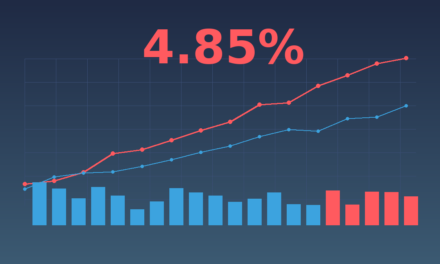
The statement records six votes to increase to 4.85% and three to leave the target unchanged at 4.60%. The September increase to 4.60% was unanimous.
September versus November
29 September 2026
4.35% → 4.60%
- Decision unanimous
- Highest cash rate since November 2011
- Industry bodies urged early loan reviews
3 November 2026
4.60% → 4.85%
- Decision carried six votes to three
- Highest in roughly 18 years, per ABC News
- Return-to-band date pushed out about three quarters
The change that matters is the path, not the level
A 25 basis point move is arithmetic your calculators handle. A forecast that keeps inflation above 3% for the coming year, and does not bring it to the top of the band until late 2027, changes the two-year horizon you are describing to clients on every file you write from today.
Where RG 273 actually sits
- RG 273.116 — the duty applies on the information available at the time, including reasonably foreseeable changes to the consumer’s circumstances and financial situation.
- Example 8 — ASIC’s own worked example confirms the assessment is point in time, and that later rate moves are generally not relevant to whether the duty was met.
- RG 273.121–122 — where the process has been delayed, consider whether a fresh assessment or further inquiries are needed.
- RG 273.104(b) — clearly record the recommendations presented, the alternatives not selected, and the steps taken to educate the client.
The takeaway
Nothing in the guidance asks you to forecast the cash rate, and on ASIC’s own guidance a later rate move is generally not relevant to a recommendation you made in August. What it does change is the client-side horizon you are reasonably able to see when you write the next file — and whether your notes record a recommendation or a prediction.
Sources: RBA, Statement by the Monetary Policy Board: Monetary Policy Decision, 3 November 2026 (media release 2026-30). ASIC Regulatory Guide 273, Mortgage brokers: Best interests duty, June 2020. APRA, macroprudential settings update, 28 May 2026. ABC News, 3 November 2026. Australian Broker and The Adviser, 29–30 September 2026. Figures as published; this is general information, not compliance advice.
Rate Watch · Monetary Policy Board Decision
Three of Nine Board Members Voted to Hold at 4.60%. The RBA Moved Its Return-to-Band Date Out About Three Quarters — and RG 273.116 Asks About Your Client, Not the Cash Rate
The cash rate target is 4.85%, up 25 basis points. That part was expected. The two things in the Board’s statement that will actually sit in your file notes for the next two years are a split vote and a forecast date that moved.
In this article
What the Board put in writing
The Reserve Bank’s Monetary Policy Board lifted the cash rate target by 25 basis points to 4.85% on 3 November 2026, from 4.60%. On ABC News’ count it is the fifth increase of 2026 and takes the cash rate to its highest level in roughly 18 years.
Strip the commentary away and the statement itself carries four things worth reading closely. The first is the decision and how it was reached. The second is a materially revised inflation outlook, which the Board attributes partly to higher fuel and commodity prices linked to the unresolved Middle East conflict and partly to a judgement that domestic capacity pressures are a little tighter than previously thought. The third is a labour market that is loosening faster than the Bank expected in August. The fourth is a warning about expectations.
“…is not expected to reach the top of the 2–3 per cent target range until late 2027” — “around three quarters later than previously forecast.”
“…there is an increasing risk that higher inflation expectations will become embedded.”
“…the unemployment rate is projected to rise by more than expected in the August forecasts.”
Statement by the Monetary Policy Board: Monetary Policy Decision, Reserve Bank of Australia, 3 November 2026
The Board also acknowledged plainly that “the economy is slowing, housing prices have fallen significantly and the unemployment rate has risen”, and closed by saying it “will continue to do what it considers necessary to bring inflation sustainably back to target”. It is an unusual combination to hand a broker: tightening into a slowing economy and a falling housing market, with the Bank’s own forecast horizon for relief pushed further away.
The dissent is the new information
The statement records that six members voted to increase the cash rate target to 4.85% and three voted to leave it unchanged at 4.60%. That is a nine-member board a third of the way toward not moving at all.
Set that against September. When the Board took the cash rate from 4.35% to 4.60% on 29 September — then the highest level since November 2011 — Australian Broker reported the decision as unanimous. Six weeks later, on a worse inflation print and a worse forecast, a third of the Board wanted to stop.
Why this matters to brokers
A unanimous board reads as a committed direction. A 6–3 board reads as a genuine argument about whether the work is done. Those are different things to be describing to a client who asks you where rates go next — and the honest answer has become less certain, not more, even though the rate went up.
There is a practical temptation here worth naming. When the cash rate rises five times in a year, the easiest way to settle a nervous client is to offer a shape for the future: this is the peak, or close to it, and relief follows. The vote is a reminder that the nine people with the best information in the country could not agree on whether 4.60% was already enough. Nothing obliges you to resolve that for a client, and quite a lot of sense says you should not try.
The date moved, and that is the client conversation
Of everything in the statement, the line most likely to change a broker’s work is not the level but the timing. Inflation is now expected to stay above 3% for the coming year and to remain elevated through much of 2027, and is not expected to reach the top of the 2–3% target range until late 2027 — around three quarters later than the Bank previously forecast.
Read that as a planning horizon rather than a prediction. Three quarters is most of a year. For a client sitting in front of you this week, it means the Bank’s own central case no longer has inflation back at the top of the band inside a typical two-year fixed term, let alone a one-year one. For a client on a fixed rate expiring in 2027, it means the roll-off conversation you had planned to have against an easing backdrop now sits against a different one.
That reshapes several standing conversations at once:
- Fixed versus variable. The case for certainty is not a case for a forecast. A client who needs repayment certainty needs it regardless of where the cash rate goes, and the Board’s revised path does not settle which product is cheaper over the term.
- “I’ll wait for the cut.” Clients who deferred a purchase or a refinance in expectation of near-term relief have now had the Bank move that date on them. That is a reason to re-open the conversation, not a reason to push a decision.
- Buffer headroom. APRA’s minimum serviceability buffer remains three percentage points above the loan product rate, confirmed unchanged in its 28 May 2026 macroprudential update, alongside limits allowing banks up to 20% of new owner-occupied and investment lending at a debt-to-income ratio of six times or more, and a countercyclical capital buffer of 1% of risk-weighted assets. Those settings do not move with the cash rate, but what they are applied to does.
One caution on pass-through. At the time of writing, Finder’s lender tracker for the November decision listed scores of lenders but no confirmed increase amounts or effective dates. Assume nothing about your client’s new repayment, and quote nothing, until their lender has published. Rate moves also take time to bite: ABC News notes the RBA considers rate changes take 12 to 18 months to flow fully through the economy.
Files already in your pipeline
The first question in most broker inboxes today is what happens to work already in train. Two different situations are worth separating.
A recommendation made, but not yet acted on
Where the credit assistance process has been subject to delay, RG 273.121 says you should consider whether you need to start a new assessment or make further inquiries into the consumer’s circumstances before making a recommendation or assisting them to take out a product. RG 273.122 lists what to weigh in deciding: the length of the delay, whether the information considered is reasonably current and likely to still reflect the consumer’s circumstances, and your responsible lending obligations. A note to that paragraph points to the requirement to undertake inquiries within 90 days of credit assistance being provided, with RG 209 as the reference.
ASIC’s own worked example on that point involves a five-month gap, and the commentary is direct: the broker cannot solely rely on their initial inquiries for the previous recommendation and will need to reconsider what is in the client’s best interests, which avoids issues arising if a product recommended is no longer available or the client’s circumstances have changed.
A recommendation already given effect
Here the guidance cuts the other way, and it is worth knowing before anyone talks themselves into a problem. RG 273.116 provides that the duty applies any time you provide credit assistance, “based on the information available at the time”. ASIC’s Example 8 then works through almost exactly the scenario a rate cycle produces — a broker recommends a fixed rate to a borrower worried about rate rises, and rates then move the other way, leaving the client worse off than a variable loan would have. The commentary concludes the broker complied, and adds that “generally, changes that occur after the recommendation is made are not relevant to whether the best interests duty has been complied with”, because the assessment is a point-in-time one.
Where RG 273 sits — and where it does not
This is the part most worth getting right, because it is where a well-meaning broker can invent an obligation that does not exist.
RG 273.116 does contain a foreseeability limb. The information available at the time, it says, “includes reasonably foreseeable changes to the consumer’s personal circumstances and financial situation”. Example 8 repeats it: ASIC expects brokers to consider reasonably foreseeable changes to the consumer’s personal circumstances and financial situation.
Note what that language is attached to. It is the consumer’s circumstances and financial situation. On its own terms it is not a direction to forecast the cash rate, and the point-in-time principle in the same part of the guide cuts against reading it that way.
The distinction to carry into your next appointment
The guidance does not ask you to predict the Reserve Bank. It asks you to think about what you can reasonably foresee about the person in front of you. A fixed term expiring in 2027, a parental leave period, a business with lumpy receipts, a guarantor nearing retirement — those are client-side facts, and they are the ones the foreseeability language is pointed at.
Framed that way, today’s decision changes your inputs rather than your obligations. The Board has published a central case in which elevated inflation persists through much of 2027. Whether that case eventuates is not your call. But it is now part of the publicly available backdrop against which you are looking at a client’s own position, and the sensible response is to test that position harder — not to record a view about where rates are going.
On records, RG 273.104(b) asks that you clearly record the recommendations you presented, including any alternatives not selected by the consumer, and that this should include the steps you took to educate the consumer about the options. A file note describing the options you put, the client’s stated priorities and the scenario you tested is doing that work. A file note asserting that rates will fall from a particular quarter is not a recommendation at all; it is a forecast, and it will be read back to you if it proves wrong.
The “stay put” conversation carries its own duty
Expect inbound calls this week from clients who simply want to know whether to do anything. It is worth remembering that telling them to sit tight is itself within scope.
RG 273.117 makes the point that it does not matter whether you have assisted the consumer before: if you suggest a consumer remain in a home loan you previously helped them obtain, you need to act in their best interests in making that suggestion. RG 273.119 goes further, saying you must not suggest a consumer remain in a credit contract without considering whether that would be in their best interests, and quotes the Replacement Explanatory Memorandum’s example of a broker who does so to avoid a clawback. RG 273.120 adds that for consumers thinking about refinancing, you should consider the costs associated with refinancing.
RG 273.118 is the balancing provision: the duty does not require a periodic review, and does not require you to provide credit assistance in the future — though the guide calls reviewing a client’s circumstances from time to time good practice, and notes that if you do review, or the client contacts you, the duty applies to any credit assistance you then provide.
What to review this week
- Separate your pipeline by age. Pull every file where a recommendation has been made but nothing has been submitted, and sort by the date of your inquiries. The ones approaching or past 90 days are where RG 273.121–122 and your responsible lending obligations are most likely to call for fresh work.
- Stop quoting repayments. Until the client’s lender publishes its own change and effective date, give them the mechanism rather than a number. A wrong figure in writing is worse than no figure.
- Re-run your 2027 roll-offs. Identify fixed terms expiring in 2027 and test them against a backdrop in which the Bank’s own case has inflation still elevated through much of that year, rather than the easing path you may have modelled in August.
- Audit your file notes for forecasts. Search your CRM templates and recent notes for language that predicts the cash rate. Replace it with what you actually did: the options presented, the client’s priorities, the scenarios tested.
- Prepare a “no change” answer you can stand behind. If your recommendation is that a client stays where they are, document the comparison and the refinancing costs you considered, consistent with RG 273.119 and RG 273.120, so the recommendation is visible as a decision rather than an absence of one.
- Pressure-test the client-side variables, not the rate. For each live file, write down what you can reasonably foresee about that household or business over the next two years. That is the limb RG 273.116 actually points at.
What this does to the shape of the next six months
Two parts of the statement sit oddly together and are worth holding in mind. The Board expects the unemployment rate to rise by more than it forecast in August, and acknowledged that housing prices have fallen significantly. At the same time it expects business investment, including data centre-related investment, to be stronger in the near term, and notes that growth among Australia’s major trading partners has been stronger than expected, supported by AI-related investment.
For a broker, that is a market where household capacity is tightening while parts of the business economy are still spending. It is not a prediction to act on, but it does suggest the commercial and asset finance conversations that many brokerages have been building are unlikely to go quiet in the same way a residential pipeline might.
What to watch next
- Lender pass-through. Which lenders move, by how much, and from what date. Watch particularly for lenders that pass on more than 25 basis points, or that move new-business and back-book pricing differently.
- Assessment rate updates. Lender serviceability calculators and floor rates will follow pass-through, not the cash rate itself. A number you quoted last week may not survive the week.
- Fixed rate repricing. Fixed books are priced off expectations, not the cash rate, so a revised return-to-band date can move fixed pricing independently of today’s 25 basis points.
- The full Statement on Monetary Policy. The Board’s detailed forecast tables, published alongside the decision, carry the quarterly inflation and unemployment path behind the summary language.
- APRA’s next macroprudential update. The buffer, the high debt-to-income limits and the countercyclical capital buffer were all left unchanged in May, with Chair John Lonsdale noting that “the risk landscape is volatile and could evolve rapidly”.
Key takeaways
- The cash rate target rose 25 basis points to 4.85% on 3 November 2026, on a vote of six to three, after a unanimous increase to 4.60% in September.
- The Board no longer expects inflation to reach the top of the 2–3% band until late 2027, around three quarters later than it previously forecast.
- RG 273.116’s foreseeability language is directed at the consumer’s circumstances and financial situation. It is not, on its terms, a requirement to forecast interest rates.
- ASIC’s Example 8 confirms the best interests assessment is point in time, and that changes occurring after a recommendation is made are generally not relevant to whether the duty was met.
- Where a file has been delayed, RG 273.121–122 ask you to consider a fresh assessment or further inquiries, weighing the length of the delay, how current the information is, and your responsible lending obligations.
- Suggesting a client remain in their existing loan is credit assistance, and RG 273.119–120 ask you to consider whether that is in their best interests and what refinancing would cost.
Common questions
On the guidance as written, generally no. RG 273.116 frames the duty around the information available at the time, and ASIC’s Example 8 states that changes occurring after a recommendation is made are generally not relevant to whether the duty has been complied with, because the assessment is point in time. That is general information rather than advice about your files — your licensee or compliance adviser should look at anything you are unsure of.
The guide does not set a single deadline for the best interests duty. RG 273.122 asks you to weigh the length of the delay, whether the information is reasonably current and likely still to reflect the client’s circumstances, and your responsible lending obligations — with a note pointing to the requirement to undertake inquiries within 90 days of credit assistance being provided. ASIC’s worked example on the point uses a five-month gap and concludes a fresh consideration is needed.
Nothing in RG 273 asks you to. The Board itself split six to three on whether a further increase was warranted, and its statement sets out a forecast rather than a commitment. You can describe what the Bank has published, and what it would mean for a client’s position if it holds, without recording a prediction as a basis for your recommendation.
Not as part of this decision. APRA’s most recent macroprudential update, published 28 May 2026, kept the minimum serviceability buffer at three percentage points, retained the limits allowing banks up to 20% of new owner-occupied and investment lending at a debt-to-income ratio of six times or more, and held the countercyclical capital buffer at 1% of risk-weighted assets. Confirm the current settings with your aggregator before relying on them.
That it depends on their lender’s own decision, which had not been published on Finder’s tracker for most lenders at the time of writing. Explain the mechanism, tell them you will come back with the figure once their lender confirms its change and effective date, and then do so.
The bottom line
The level is the headline and the path is the story. A 25 basis point increase to 4.85% will be absorbed by your calculators within days. A return-to-band date that has moved out by about three quarters reshapes every two-year conversation you are going to have between now and Christmas, and it does so at a moment when a third of the Board thought no further increase was needed at all.
The useful discipline is to keep those two things in their proper places. The Reserve Bank’s forecast belongs in your understanding of the market. Your client’s own foreseeable circumstances belong in your file. RG 273.116 is pointed squarely at the second, and the brokers who come out of this cycle cleanest will be the ones whose notes record what they considered and presented — not what they thought the cash rate was going to do.
Stay ahead of the next decision
Lender pass-through, assessment rate changes and policy shifts, read through what they actually do to your files.
Interactive · Pipeline Triage
Where Does This File Sit After a Rate Decision?
Pick the stage your file is at. The tool shows which parts of ASIC’s RG 273 bear on it, what the guidance asks you to consider, and — just as usefully — what it does not ask of you.
Step 1 — Choose the file’s stage
Select a stage above to see what applies.
Every decision changes something different in your pipeline. We write up which part.
This tool paraphrases ASIC Regulatory Guide 273, Mortgage brokers: Best interests duty (June 2020) for general information only. It is not legal or compliance advice and does not account for your licensee’s own requirements. Confirm your obligations with your licensee or a compliance adviser.
Disclaimer: This article is for general information and professional development purposes only. It does not constitute legal, compliance, or financial advice. Brokers should consult their aggregator’s compliance team and, where required, seek independent legal advice regarding their obligations under the National Consumer Credit Protection Act 2009 and ASIC’s responsible lending guidelines.