

In this guide
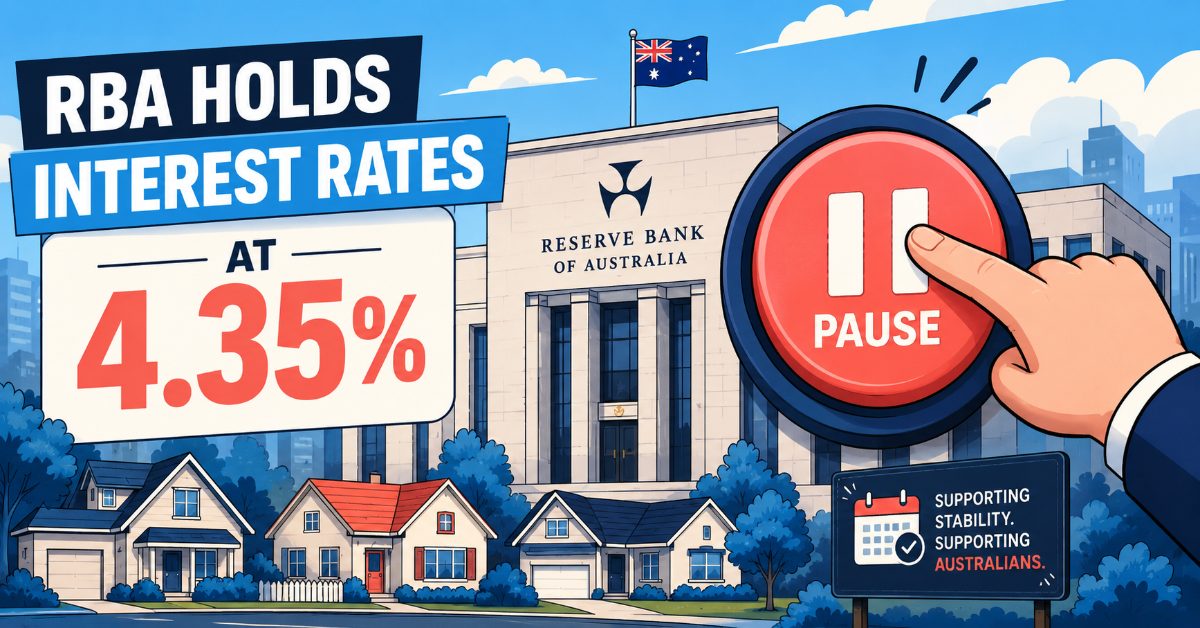
The Reserve Bank of Australia left the cash rate unchanged at 4.35 per cent at its June 2026 meeting, breaking a streak of three successive 25-basis-point increases delivered in February, March and May. Governor Michele Bullock was careful not to declare victory, warning that further tightening remains “on the table” if inflation fails to moderate. But the tone has shifted, and the market has noticed.
NAB wasted no time. Within hours of the announcement, the bank abandoned its forecast of an August rate rise, calling 4.35 per cent the likely peak and pencilling in the next move as a cut — probably in the second quarter of 2027. Eleven lenders, including ING and BOQ, have already moved independently to trim variable rates since May, a strong signal that competitive pressures are building even before the RBA formally pivots.
For mortgage brokers, this is more than a macroeconomic headline. It is a practical inflection point that will shape client conversations, pre-approval strategies and pipeline management for the rest of 2026.

Why the RBA Paused Now
The Board’s statement pointed to two factors behind the hold. First, it judged it “appropriate to hold while assessing the impact of previous hikes.” The three rises delivered between February and May added 75 basis points in four months — a pace not seen since the initial tightening cycle of 2022–23. Monetary policy operates with a lag, and the Board clearly wanted time to see those increases flow through household budgets before pulling the trigger again.
Second, the statement referenced “oil supply disruption” as a complicating factor. The RBA appears wary of confusing supply-driven price shocks with the demand-driven inflation it is trying to suppress. Raising rates into a supply shock risks damaging economic activity without addressing the underlying cause of the price pressure.
Governor Bullock’s press conference reinforced the hawkish tilt. She noted that inflation “remains too high,” that the labour market is still tight, and that the Board will not hesitate to act again if the data warrants it. But she also acknowledged that financial conditions are now “noticeably tighter” and that there are “signs the economy is slowing.”
Why It Matters
Translation: the RBA thinks it has probably done enough, but it is not ready to say so out loud.
The Market Is Already Pricing the Peak
NAB’s call is the most significant shift in the forecasting landscape. By abandoning its August rate-rise prediction and labelling 4.35 per cent the peak, NAB has joined a growing consensus that the next move will be down, not up. The bank expects the first cut in Q2 2027, aligning with a period where the full effect of the 2026 tightening is visible in the data.
Meanwhile, the independent rate cuts from eleven lenders tell their own story. ING, BOQ and others have trimmed variable rates since May — not because the RBA told them to, but because competition for mortgage business is intensifying. Lenders with strong funding positions are using price to attract refinancers and new-to-bank customers, a dynamic that tends to accelerate once the market sniffs a peak.
For brokers, this creates an immediate opportunity. Clients who were sitting on the sidelines waiting for certainty now have a plausible narrative: rates have likely peaked, lenders are already cutting, and the window to lock in competitive pricing is open.
What This Means for Client Conversations
The shift from a rising-rate environment to a hold-and-watch environment changes the tone of every client interaction. Here is how to adjust.
Existing variable-rate borrowers
These clients have absorbed three rate increases in four months. Many will be feeling the pinch. The independent rate cuts from lenders like ING and BOQ give you a concrete reason to reach out. A proactive review call — “I’ve been watching the market and there are lenders offering sharper rates right now” — is both good service and good business.
Proactive Review Call
“I’ve been watching the market and there are lenders offering sharper rates right now”
ASIC Best Interest Duty
Under ASIC’s Best Interest Duty obligations, brokers should be documenting why a particular product or lender is suitable for each client’s circumstances. In a market where eleven lenders have moved independently, the case for reviewing existing arrangements is strong. If a client is paying a rate materially above what is now available, and there is no compelling reason to stay (offset balances, loan features, or break costs on a fixed component), a refinance conversation is not just commercially sensible — it is arguably required by your duty to act in the client’s best interest.
Fixed-rate clients approaching expiry
Borrowers on two- and three-year fixes from 2023–24 will be transitioning to variable in the coming months. The good news is they are rolling off into a market where variable rates are trending down, not up. The bad news is that even the best current variable rate will be materially higher than their expiring fixed rate.
Walk them through the numbers, show them the repayment increase, and explore whether a split between variable and a short-term fix makes sense. If NAB’s forecast is right and cuts begin in Q2 2027, a one-year fix at a competitive rate could bridge the gap while preserving flexibility.
Pre-approval and new purchase clients
Serviceability buffers remain a critical issue. APRA’s 3 per cent serviceability buffer, applied on top of the loan rate, means a borrower assessed at the current variable rate of around 6.5 per cent is being stress-tested at roughly 9.5 per cent. The three rate rises this year have progressively reduced maximum borrowing capacity for many clients.
Understanding Serviceability Buffers
APRA’s 3 per cent serviceability buffer, applied on top of the loan rate, means a borrower assessed at the current variable rate of around 6.5 per cent is being stress-tested at roughly 9.5 per cent. The three rate rises this year have progressively reduced maximum borrowing capacity for many clients.
The hold provides stability. Pre-approvals issued now are less likely to be undermined by a further rate rise before settlement, which has been a genuine risk for purchasers in the first half of 2026. Brokers should use this window to get fence-sitting buyers across the line: rates have paused, pre-approvals have a clearer shelf life, and competitive lender tension is creating genuine pricing opportunities.
Investor clients
Investors have been squeezed hardest by the 2026 tightening cycle. Higher rates compress yields, increase holding costs, and reduce borrowing capacity — a triple hit that has cooled investor activity in most markets. The pause may bring some investors back to the table.
However, brokers should be cautious about framing the hold as a green light for leveraged property investment. APRA continues to monitor investor lending closely, and responsible lending obligations under the National Consumer Credit Protection Act require brokers to ensure any recommendation is suitable for the client’s financial position. The fact that rates have paused does not change the affordability equation for a client who was already stretched.

Pipeline Management: Practical Steps for Brokers
Beyond individual client conversations, the rate hold creates an opportunity to tighten up your pipeline and positioning.
- Audit your back book. Pull a list of every variable-rate client and compare their current rate to the best available from lenders on your panel. Where there is a material gap, make the call. This is both a retention strategy and a compliance obligation under Best Interest Duty.
- Refresh your rate matrix. The independent lender movements mean your comparison tools may be out of date. Update your rate sheets, particularly for ING, BOQ and the other lenders that have moved. Nothing undermines credibility faster than quoting yesterday’s rates.
- Reactivate stalled leads. Buyers who pulled back during the February–May tightening cycle may be ready to re-engage. A short, factual message — “The RBA held rates this month and several lenders have started cutting. Want to revisit your numbers?” — is low-pressure and timely.
Reactivating Stalled Leads
“The RBA held rates this month and several lenders have started cutting. Want to revisit your numbers?”
- Prepare for a refinance wave. If NAB is right and the market has peaked, the next twelve months will see a significant increase in refinance activity. Get your processes, documentation and lender relationships in order now so you can handle the volume when it arrives.
- Update your content and communications. Now is the time to put out clear, jargon-free commentary on what the hold means. Positioning yourself as the broker who explains the market — rather than just reacting to it — builds trust and drives inbound enquiries.
Where Do Rates Go from Here?
The honest answer is that nobody knows with certainty. But the balance of evidence is shifting.
On the hawkish side, inflation remains above the RBA’s 2–3 per cent target band, the labour market is still tight, and Governor Bullock has explicitly left the door open to further hikes. The oil supply disruption adds unpredictability to the inflation outlook.
On the dovish side, financial conditions are tighter than they have been in over a decade, the economy is showing clear signs of slowing, and the lag effects of 75 basis points of tightening in four months have not yet fully materialised. NAB’s call of a Q2 2027 cut is predicated on the view that once the data catches up with the rate rises, the case for easing will become compelling.
The most likely scenario is an extended hold through the second half of 2026. The Board will want to see at least two quarters of inflation data confirming a sustained downward trend before considering a cut. That means brokers should plan for a stable rate environment for six to nine months, with the prospect of easing emerging in early to mid 2027.
That is not a bad environment for broking. Rate stability reduces uncertainty, makes pre-approvals more reliable, and gives clients confidence to transact. The competitive tension among lenders will only intensify as the prospect of an RBA cut draws closer.
A Note on Compliance
Compliance Essentials
In a shifting rate environment, compliance discipline is more important than ever. ASIC has been clear that Best Interest Duty requires brokers to demonstrate that their recommendations are based on the client’s circumstances, not the broker’s commercial interests. When eleven lenders are independently cutting rates, a broker who fails to consider those options for existing clients is exposed.
Similarly, APRA’s serviceability buffer continues to apply regardless of where market commentators think rates are heading. Brokers should not be structuring applications on the assumption that rates will fall. The buffer exists precisely to protect borrowers against the possibility that forecasts are wrong.
Document your reasoning, maintain your file notes, and ensure that every recommendation can withstand scrutiny. The regulatory environment has not changed just because the rate cycle might be turning.
The Bottom Line
The RBA’s decision to hold at 4.35 per cent is the clearest signal yet that the 2026 tightening cycle is at or near its end. The market agrees: NAB has called the peak, eleven lenders have cut independently, and financial conditions are doing the heavy lifting the RBA intended.
For brokers, this is a moment to be proactive, not passive. Audit your back book. Re-engage stalled leads. Prepare for the refinance wave that rate stability and eventual cuts will bring. And through it all, maintain the compliance discipline that protects both your clients and your business.
The next few months will reward brokers who understand the cycle, communicate clearly, and move decisively. The pause is here. Make it count.
Explore More Broker Insights