

Too Busy to Read? We’ve Got You.
Get this blog post’s insights delivered in a quick audio format — all in under 10 minutes.
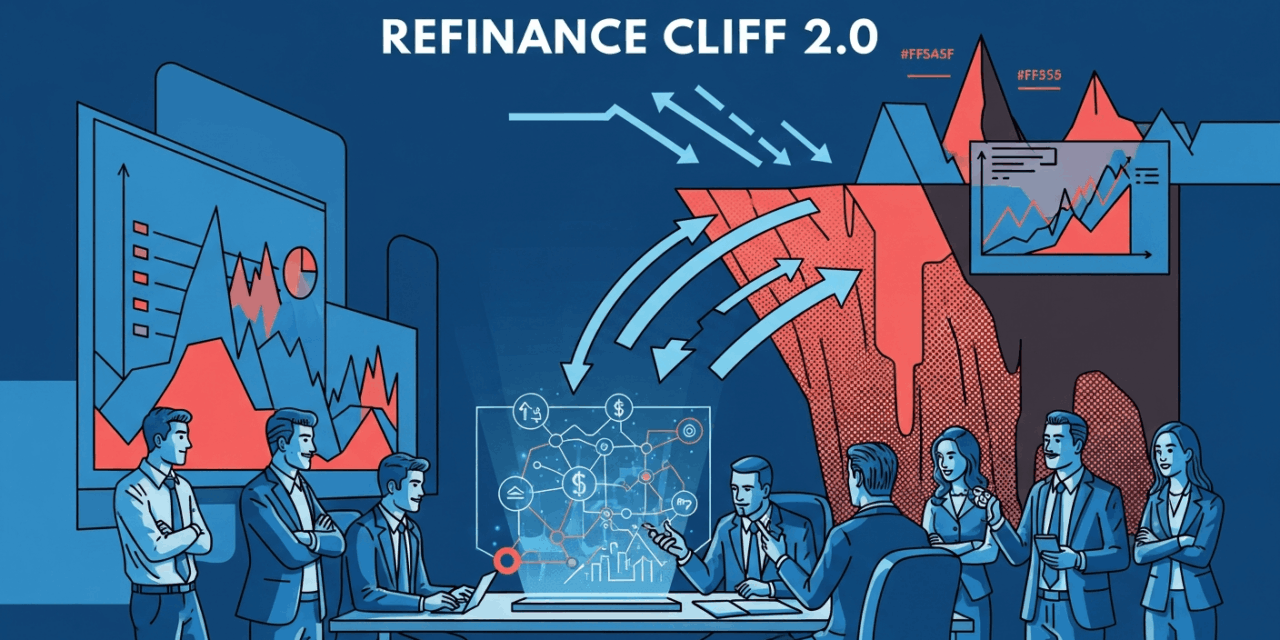
This audio version covers: The Client Retention Engine Managing the Refinance Cliff 2.0
The Client Retention Engine: Managing the “Refinance Cliff 2.0”
Executive Summary
The Australian mortgage broking industry stands at a precipice as it approaches the 2026 financial year. We are entering the era of the “Retention Engine,” where the primary battleground for enterprise value is no longer the acquisition of new clients, but the strategic defense of the existing portfolio against a phenomenon we designate as “Refinance Cliff 2.0.”
This report provides an exhaustive operational blueprint for navigating this new landscape, driven by revised rate hike forecasts from CBA and NAB and the mechanics of the “Loyalty Tax.”
1. The Retention Battleground
The strategic necessity of a retention-first business model is a direct response to the hardening economic conditions projected for 2026. Contrary to the widespread market anticipation of rate cuts, major institutions have revised their forecasts.
The Hawkish Pivot: 2026 Interest Rate Forecasts
Throughout 2024 and 2025, the market operated under a “peak rate” assumption. However, persistent inflationary pressures have forced Australia’s largest lenders to radically alter their forward guidance.
| Institution | Feb 2026 Prediction | End-of-Year 2026 Rate | Strategic Implication |
|---|---|---|---|
| CBA | +0.25% Hike | 3.85% | Prepare clients for repayment shock in Q1. |
| NAB | +0.25% Hike | 4.10% | Plan for cumulative stress; serviceability buffers will break. |
| ANZ | Hold | 3.60% | Conservative outlook; watch for CPI spikes. |
| Westpac | Hold | 3.10% | Outlier bear case; likely relies on economic deterioration. |
Source: Canstar and Broker News data.[1, 2]
The Mechanism of “Refinance Cliff 2.0”
If the cash rate rises to 4.10% as predicted by NAB, the retail variable rate will likely settle in the 6.85% to 7.50% range. Under APRA’s current serviceability buffer guidelines (3.00%), borrowers will need to demonstrate repayment capacity at 9.85% to 10.50%.
The Mortgage Prison Effect
Many existing clients will effectively be locked out of the refinance market because they cannot pass the new serviceability tests. This makes the broker the only advocate the client has to manage the cost of existing debt through repricing.
2. The “Rate Creep” Audit Strategy
Banks rely on customer inertia. The “Loyalty Tax” is the gradual decoupling of the interest rate paid by existing customers (back book) from the rate offered to new customers (front book).
The Audit Workflow
To effectively combat rate creep, brokers must move from ad-hoc reviews to a systematic “Audit Strategy” composed of four phases.
Phase 1: Export (Smart Segmentation)
Query your CRM (BrokerEngine, Mercury, Salestrekker) for:
- Loan Age > 24 Months
- LVR < 80% (Use an AVM to update property values)
- Variable Rate / P&I
Phase 2: Compare
Calculate the gap: Current Client Rate – Best Available Internal Rate.
Phase 3: Act
Submit the request via your aggregator’s pricing tool or utilize automation tech like Sherlok or Stryd.
Phase 4: Communicate (The Value Transfer)
If you achieve a rate reduction but fail to communicate it effectively, the retention benefit is lost. You must own the win.
“Hi [Client], I’ve just negotiated a 0.25% rate drop with your bank. This saves you approx $80/month. No paperwork needed from you—I’ve handled it. Given the potential for rate hikes in 2026, this provides a crucial buffer.”
3. Case Studies in Growth
Focus Finance: The High-Touch Service Model
Principal: Katie Thomas (2025 Westpac Australian Broker of the Year)
Focus Finance decouples the “Finder,” “Minder,” and “Grinder” roles. By employing dedicated Client Service Managers to handle the administrative burden of the audit, brokers are freed to focus on “genuine, authentic human interaction.” Retention is treated as a team sport.
Green Finance Group: The Niche Specialist
Principal: Daniel Green (Commercial Broker of the Year)
Daniel Green creates a defensive moat through deep specialization in childcare and hospitality. He conducts an “annual review for every commercial loan,” turning a compliance task into a strategic business planning session that deepens the client relationship.
4. Technology Enablers
| Technology | Leading Tools | Function |
|---|---|---|
| Automated Repricing | Sherlok, Stryd | AI monitors the book 24/7. Sherlok can auto-lodge pricing requests when the gap exceeds 0.25%. |
| Serviceability | Quickli | Instantly assess whether a client can pass the serviceability buffer for a refinance vs. a reprice. |
| Workflow / CRM | BrokerEngine | Manages the “Fixed Rate Expiry” (90 days out) and annual review triggers. |
Conclusion & Call to Action
The forecasts for 2026 are clear: the era of “easy money” is not returning. The “Client Retention Engine” is your only viable defense.
Broker Action Plan: The 30-Day Sprint
- Week 1: Run the “Audit Export” for loans settled before Jan 2024.
- Week 2: Schedule a demo with an automated repricing tool (Sherlok/Stryd).
- Week 3: Execute a pilot on 10 clients. Aim for the MFAA benchmark of 0.35% savings.
- Week 4: Broadcast the “2026 Market Update” to your database.
Be the broker who builds the bridge, not the one who watches their clients fall.
Download the Audit ChecklistReferences:
[1] Canstar and Broker News data regarding 2026 forecasts.
[2] NAB Economic Forecasts, late 2025.
[3] MFAA “Value of Mortgage and Finance Broking” Report 2025.
[4] CBA Fixed Rate announcements, late 2025.