
Too Busy to Read? We’ve Got You.
Get this blog post’s insights delivered in a quick audio format — all in under 10 minutes.
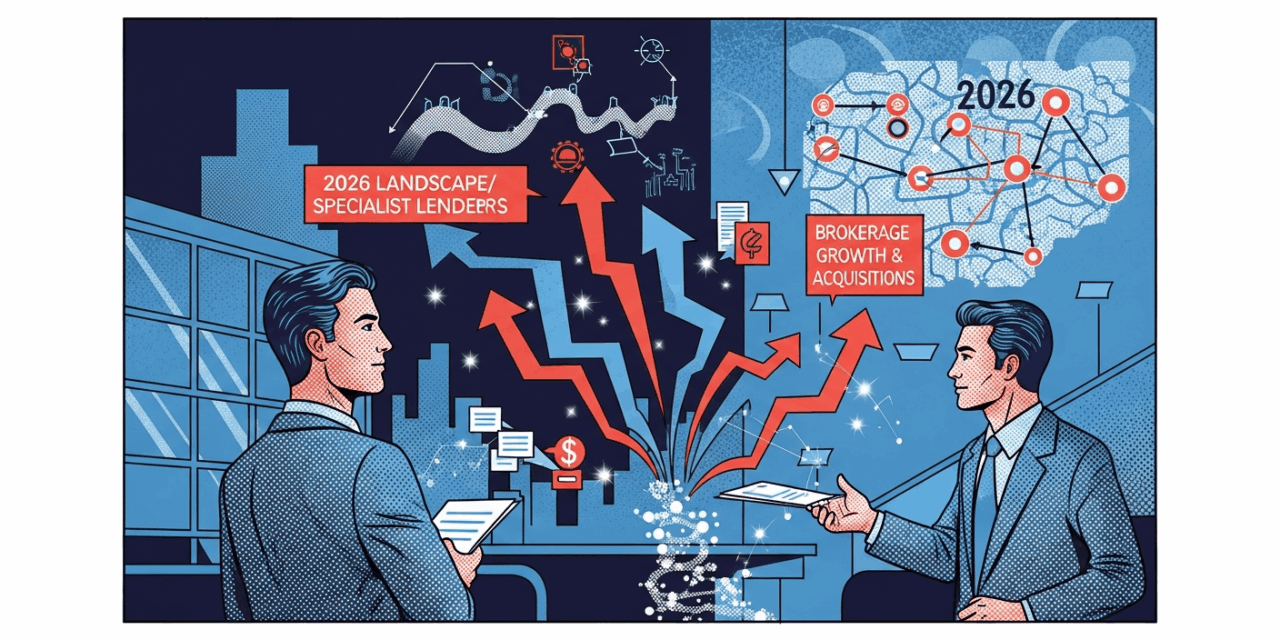
This audio version covers: The Rise of Niche Trail Book Financing: Navigating the 2026 Landscape of Specialist Lenders to Fund Brokerage Growth and Acquisitions
The Rise of Niche Trail Book Financing
The Australian mortgage broking industry has transitioned from a collection of sole practitioners into a sophisticated, capital-intensive sector contributing $4.1 billion in economic activity.[1] In 2026, the trail book is no longer just a retirement annuity—it is a liquid strategic asset. With brokers facilitating 75% of residential loans, specialist lenders like Co.Credit and Broker Capital have emerged to unlock the value of these books for business growth.[1, 2, 3]
Strategic Roadmap
Step 1: The Specialist Lender Landscape
Traditional banks often struggle with the intangible nature of trail annuities, sometimes requiring six months for due diligence.[2] Specialist lenders have bridged this gap with tech-led, “asset-lite” financing where the trail book itself serves as the primary security.
| Specialist Lender | Key Product Advantage | Target Use Case |
|---|---|---|
| Co.Credit | Fully automated, “Low Doc,” 24h approval [4, 2] | Rapid acquisitions, scaling, short-term liquidity [5] |
| Broker Capital | 1.5x annual trail, fast funding in 1 week | Consolidation, partner buy-outs, debt restructuring [3] |
| Australian Business Credit | Designed by brokers, no second mortgage required | ATO debt, working capital, expansion |
Step 2: 2026 Valuation Theory & Seasoning
We are currently in a “bull market” for trail books, with buyer demand outstripping supply 7-to-1 . While the median valuation multiple sits at 2.39x annual earnings, premium books are closing in on 3.0x.[6, 7]
The Seasoning “Sweet Spot”
Valuations are driven by “seasoning”—the age and stickiness of the loans in your book :
- High Risk (0-24 months): High refinance and clawback risk .
- Optimal (24-60 months): Sticky loans with high principal balances .
- Diminishing (60+ months): Principal pay-down reduces ongoing trail .
Step 3: The Mathematics of Acquisition
Using leverage to acquire trail books significantly increases your Return on Investment (ROI) compared to cash purchases. Using the “Out-of-Pocket Method,” brokers can scale without depleting personal cash reserves .
Strategic Formula: Borrowing capacity is typically capped at 1.5x your annual trail income.[3, 8]
For example, a broker with $10,000 in monthly trail can access $180,000 in capital to acquire a new book, instantly increasing net cash flow if loan repayments are lower than the new income.[3, 8]
Step 4: Navigating the ASIC Regulatory Shift
The 2026 landscape is governed by a proactive, data-driven approach from ASIC.[9, 10] The regulator is specifically monitoring Best Interest Duty (BID) compliance and product recommendation behavior as brokers now control 75% of the market .
2026 Enforcement Priorities
- Private Credit Surveillance: Focus on valuations, liquidity, and transparency.[11, 12]
- Compliance Data: ASIC is reviewing aggregators for loan flows and consumer complaints .
- Hardship Obligations: Lenders and brokers must maintain robust processes for consumers in financial difficulty.[10]
Step 5: Strategic Expansion Case Studies
Modern “Growth Brokers” are utilizing financing to move from day-to-day operations to enterprise management. Consider the case of Nitish, who used a business loan to purchase a trail book and hire two brokers .
The Outcome: By using debt rather than home equity, he achieved a better work-life balance and shifted his focus to coaching and substantial growth .
Step 6: Practical Readiness Framework
Before applying for specialist finance, ensure your business meets these 2026 “clean book” benchmarks:
| Metric | Target Benchmarks |
|---|---|
| Clawback Rate | Target < 5%; Caution > 15% |
| Runoff Rate | Target < 23% per annum |
| ATO Obligations | Current BAS and Payday Super compliance |
Future-Proof Your Brokerage
The rise of niche financing has transformed trail income from a passive payment into a powerful engine for business evolution. In 2026, the successful broker is the one who treats their book as an enterprise, not just a job.
Subscribe for More Real Broker News